



RAJASTHAN — THE HIDDEN HERITAGE
Introduction
The Heritage We Can Wear
Perhaps one of the most beautiful things about Rajasthan’s heritage is that it can be worn.
A block-printed kurta.
A Bandhani dupatta.
A Leheriya saree.
A colourful odhni.
A pair of traditional juttis.
A handcrafted piece of jewellery.
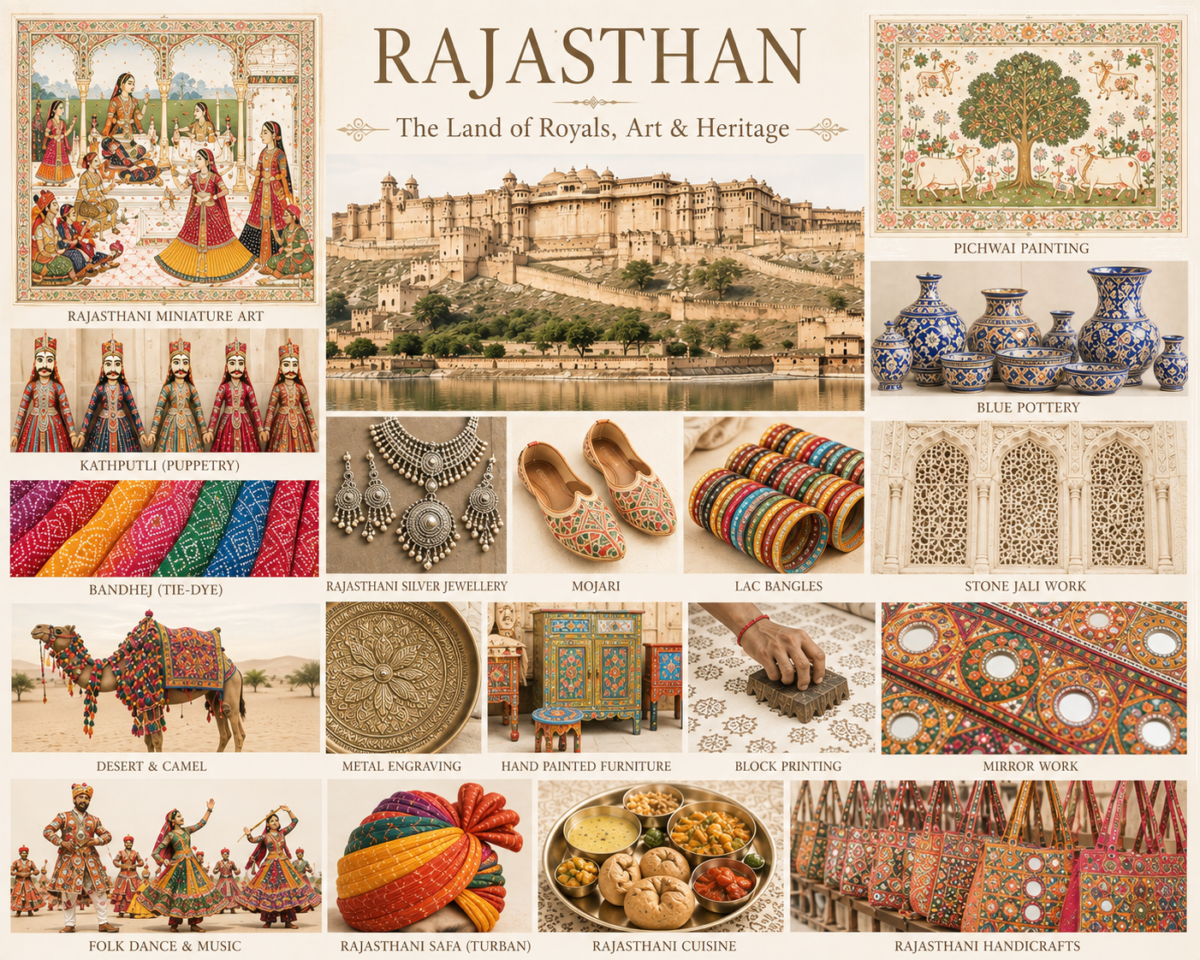
These objects allow heritage to move beyond monuments and become part of everyday life.
The Famous Takeaways of Rajasthan-India.
If Rajasthan had to be captured in a collection of objects, colour and techniques, these would be among its most recognizable signatures:
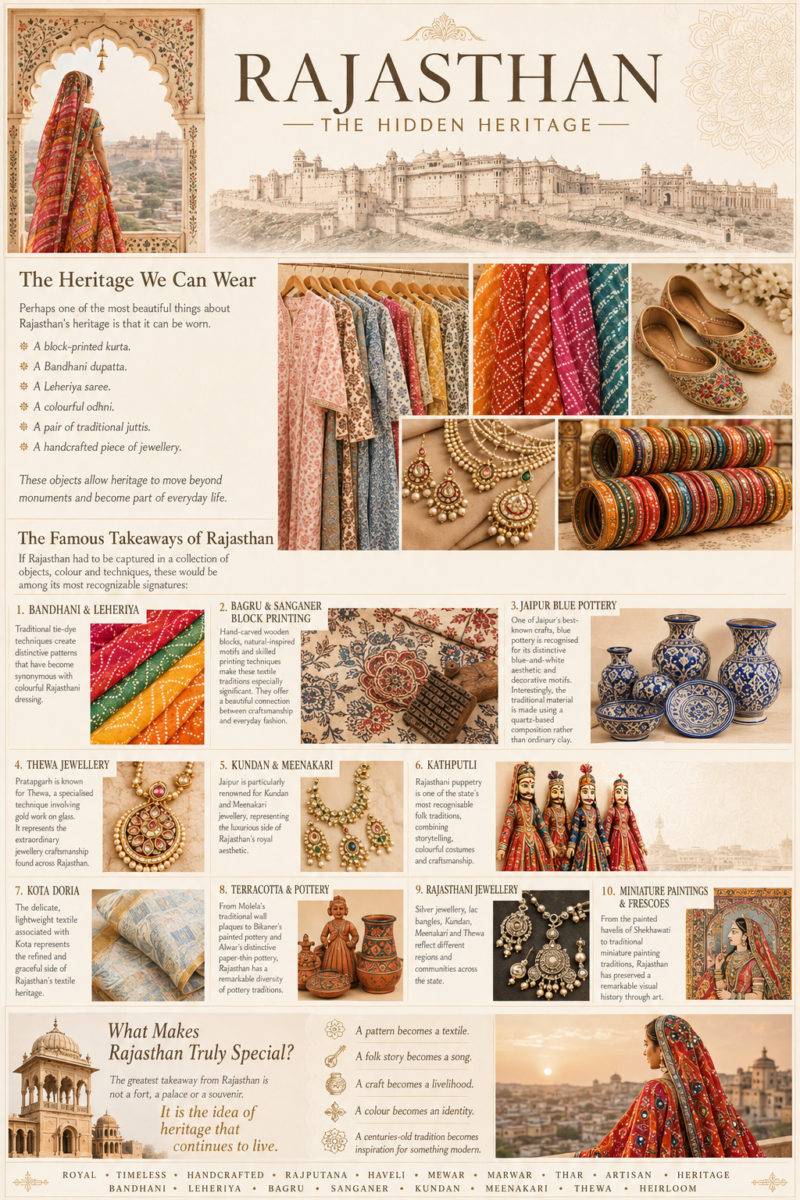
1. Bandhani & Leheriya
Bandhani, also known as Bandhej, is a traditional tie-and-dye technique. Small portions of fabric are tightly tied with thread before dyeing, creating distinctive dotted patterns when the knots are opened.
Leheriya means wave-like and refers to the characteristic diagonal or flowing stripes created through a specialised tie-and-dye process.
Its flowing lines are inspired by the movement of waves, giving the fabric a lively and elegant appearance. Leheriya is particularly associated with Rajasthan and is traditionally seen in sarees, dupattas, turbans and festive clothing.
2. Bagru & Sanganer Block Printing
Hand-carved wooden blocks, natural-inspired motifs and skilled printing techniques make these textile traditions especially significant. They offer a beautiful connection between craftsmanship and everyday fashion.
3. Jaipur Blue Pottery
One of Jaipur’s best-known crafts, blue pottery is recognised for its distinctive blue-and-white aesthetic and decorative motifs. Interestingly, the traditional material is made using a quartz-based composition rather than ordinary clay.
4. Thewa Jewellery
Pratapgarh is known for Thewa, a specialised technique involving gold work on glass. It represents the extraordinary jewellery craftsmanship found across Rajasthan.
5. Kundan & Meenakari
Jaipur is particularly renowned for Kundan and Meenakari jewellery, representing the luxurious side of Rajasthan’s royal aesthetic.
6. Kathputli
Rajasthani puppetry is one of the state’s most recognisable folk traditions, combining storytelling, colourful costumes and craftsmanship.
7. Kota Doria
The delicate, lightweight textile associated with Kota represents the refined and graceful side of Rajasthan’s textile heritage.
8. Terracotta & Pottery
From Molela’s traditional wall plaques to Bikaner’s painted pottery and Alwar’s distinctive paper-thin pottery, Rajasthan has a remarkable diversity of pottery traditions.
9. Rajasthani Jewellery
Silver jewellery, lac bangles, Kundan, Meenakari and Thewa reflect different regions and communities across the state.
10. Miniature Paintings & Frescoes
From the painted havelis of Shekhawati to traditional miniature painting traditions, Rajasthan has preserved a remarkable visual history through art.
What Makes Rajasthan Truly Special?
The greatest takeaway from Rajasthan is not a fort, a palace or a souvenir.
It is the idea of heritage that continues to live.
A pattern becomes a textile.
A folk story becomes a song.
A craft becomes a livelihood.
A colour becomes an identity.
A centuries-old tradition becomes inspiration for something modern.
Teachings
Rajasthan teaches us that heritage does not have to remain in the past. It can evolve while retaining its soul.
Conclusion
Rajasthan’s true heritage is not limited to its forts, palaces, or monuments—it lives through the hands of its artisans, the colours of its textiles, the stories of its folk traditions, and the craftsmanship passed from one generation to another.
From Bandhani and Leheriya to Bagru printing, Blue Pottery, Kundan, Meenakari, Thewa, Kathputli and traditional jewellery, every craft carries a story of identity, skill and tradition.
The greatest lesson Rajasthan gives us is simple: heritage does not have to remain in the past. It can be worn, used, celebrated and reimagined for the modern world while keeping its soul alive.
Rajasthan is not just a place to remember—it is a heritage to live.